

Upcoming Courses
“Be ready to stretch your thinking, open your mind to new ideas and ways to look at language. This is different from how we were taught in school and in teacher prep, for that matter. If you want to grow and develop as an effective teacher, this is it.”
- Gwyneth, Regional Education Services Consortium Coordinator
Online Learning

Teaching the Language of Creative Writing | October 15-November 5, 2026
Why do students pack their stories with actions - one event after another? How can we help make their writing more interesting by varying pace and moving beyond “uncomplicated complications”? Grounded in Sally Humphrey’s narrative phases — Actions, Reactions, Interactions, and Descriptions — this 4-part virtual series explores the precise language choices that make writing come alive. Through mentor texts and hands-on practice, you’ll learn how to help students craft vivid worlds, deep character relationships, and complications and resolutions that matter.
Dates: Thursdays, 6-7:30 pm US Central; October 15, 22, 29, and November 5
4 Sessions (6 hours) | Instructor Led Online Course | Certificate of Completion
$249 per participant
Visible Language Foundations - Self-Paced Module Coming Soon!
Transform how you teach language across disciplines. This first self-paced module in our Visible Language Toolkit series introduces core Systemic Functional Linguistics concepts and initial classroom practices including genre mapping, contrastive text analysis, the mode continuum, and the Teaching & Learning Cycle.
5 Hours | Certificate of Completion
Learn at Your Own Pace: Work through a full lesson in one sitting or pause and pick up right where you left off
Concept to Classroom: Complete guided activities that build your understanding of key SFL concepts and help you adapt core strategies to your classroom and students.
Prerequisites: None
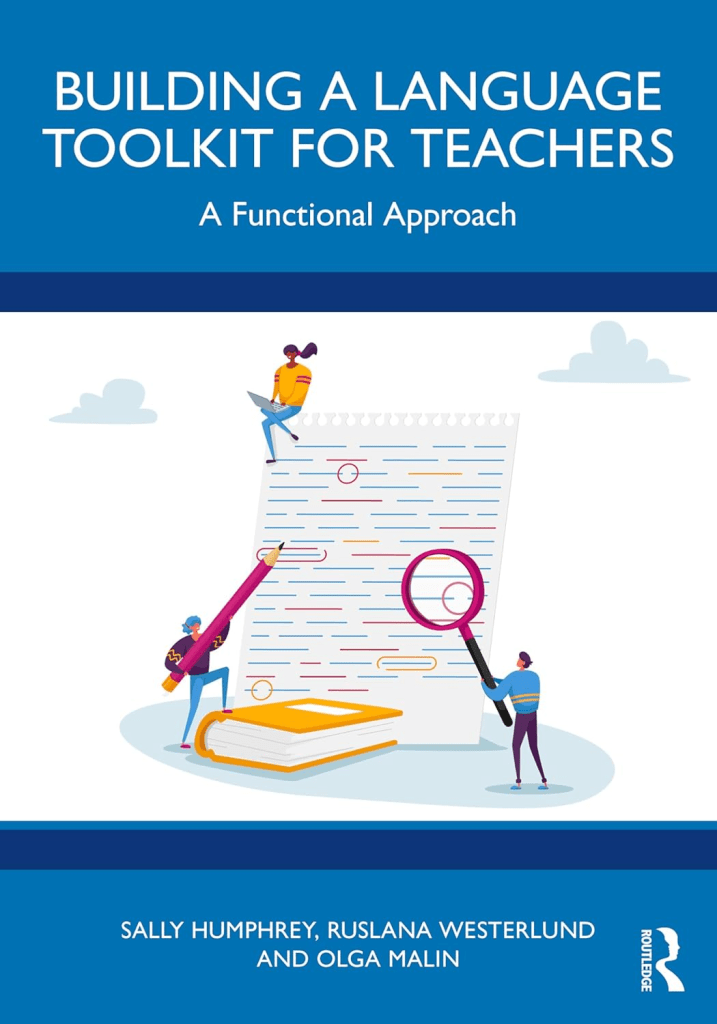
Spring 2027 Author-Led Building a Language Toolkit Book Study
Missed the first cohort of our global book study last summer? We’re bringing it back!
Join co-authors Sally Humphrey and Ruslana Westerlund in Spring 2027 for a second offering of our popular guided book study. Grounded in our Routledge book, Building a Language Toolkit for Teachers, this experience is specifically designed to help educators deepen instructional strategies using the power of a functional language lens. Offered across multiple global time zones to fit your schedule.
Spring 2027. Dates announced soon. Registration opens mid-late Fall.
7 Sessions | 10.5 Hours | Online Course | Certificate of Completion
$300 per participant (course book purchased separately)
“This is different from how we were taught in school and in teacher prep, for that matter. If you want to grow and develop as an effective teacher, this is it. While the phonics side of the reading rope is foundational, this is the rest of it... this is the language comprehension part that helps people understand the how and why of language.” - Summer 2026 Book Study Participant

Here are examples of other workshops and courses we offer.
They can be tailored for local professional learning upon request.
There’s Always More to Learn
Writing Across Disciplines
Analyzing Student Data Using WIDA and CA ELD Proficiency Level Descriptors
Supporting Multilingual Learners: Providing Access to Complex Texts
Disciplinary Literacy in Grades 3-12
Cohesive Devices for Comprehension and Flow
The Teaching and Learning Cycle for Disciplinary Genres
Lesson Planning with the WIDA ELD Standards or CA ELD Standards

A Look Inside: Building Your Visible Language™ Toolkit
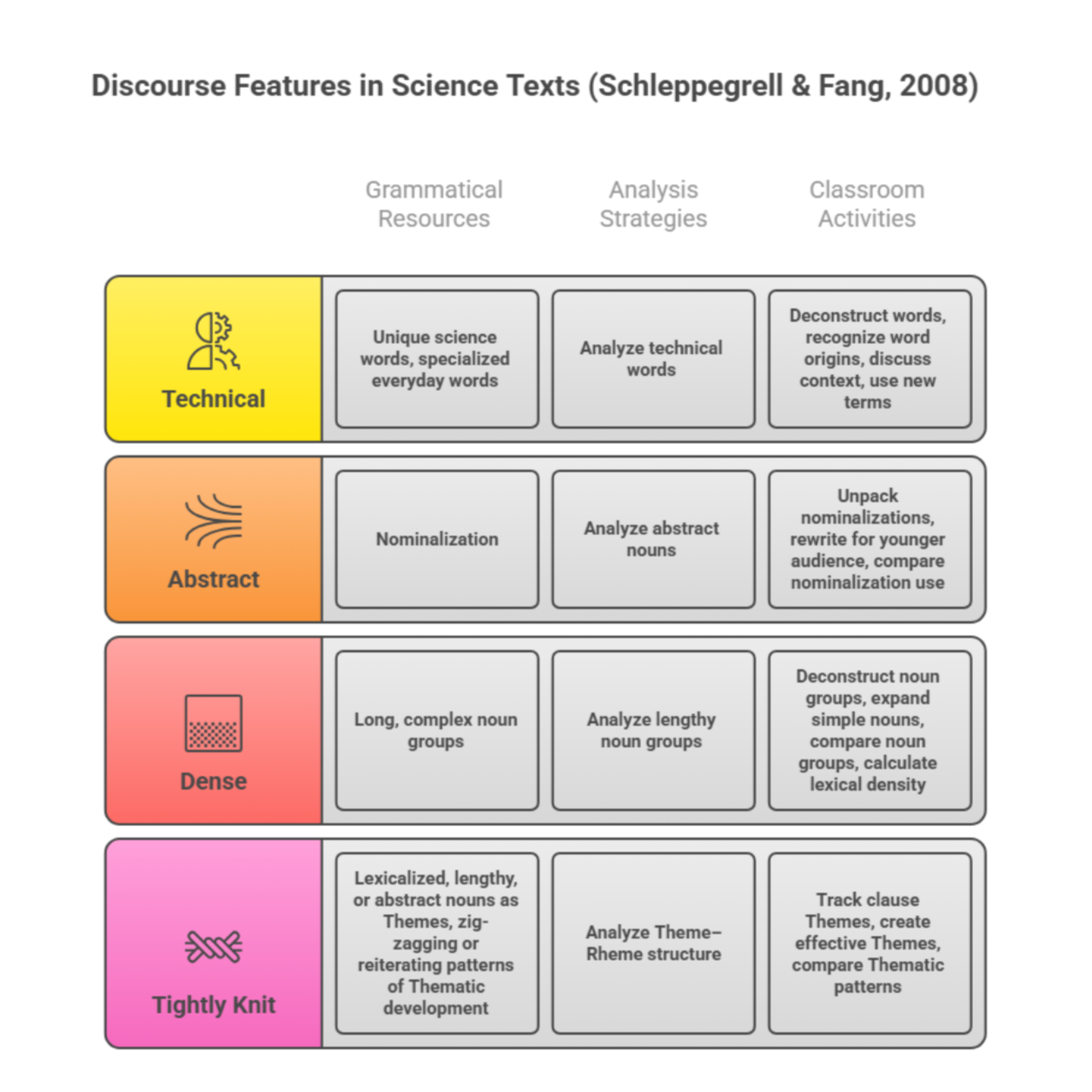
Science texts can be dense and difficult to understand. Teachers can help students see language patterns — “discourse features” — instead of a wall of text. They learn to unpack and digest complex texts rather than skim them.
That’s just one example.
Here are more Visible Language practices that use systemic functional linguistics to empower students.
-
UNIT LEVEL
Chaining of Lessons and Learning Experiences: Engineer success through careful sequencing of lessons through macro- and micro- pedagogical scaffolding.
LESSON LEVEL
Analyze Language Demands: Teach the unique language features of disciplinary genres: scientific explanations, historical arguments, and literary analysis essays.CLASSROOM LEVEL
Teaching and Learning Cycle: Use an apprenticeship pedagogy that moves students from deconstructing mentor texts to independent mastery
-
Sense-Making Through Talk: Design talk-centered learning classrooms where students talk about concepts, ideas, and language in the context of text
The Mode Continuum: Strategically shift students from spoken-like hands-on learning and “everyday” language to authoritative expert-like writing.
Text Unpacking: Empower students by taking the mystery out of dense academic texts by identifying expanded noun groups, clause relationships, and implicit causality.
Deconstruction and Joint Construction: After students have built their conceptual knowledge, teacher apprentices students to the language of the genre.
-
Metalinguistic Reflection: Students learn that language is THEIR resource for accomplishing THEIR purposes in and outside of school.
Explicit modeling and deconstruction of language of the genre, so students understand how texts work and can take increasing ownership of meaning-making
Structured opportunities for joint and independent construction, gradually releasing responsibility from teacher to student
Clear success criteria and reflection, enabling students to monitor, revise, and strengthen their own language and thinking